In Georgia, Clerics Use Anti-Vaxx Rhetoric, Call Pandemic a “Bluff” - Polygraph.info
In Georgia, Clerics Use Anti-Vaxx Rhetoric, Call Pandemic a “Bluff” - Polygraph.info |
| In Georgia, Clerics Use Anti-Vaxx Rhetoric, Call Pandemic a “Bluff” - Polygraph.info Posted: 15 May 2020 11:55 AM PDT 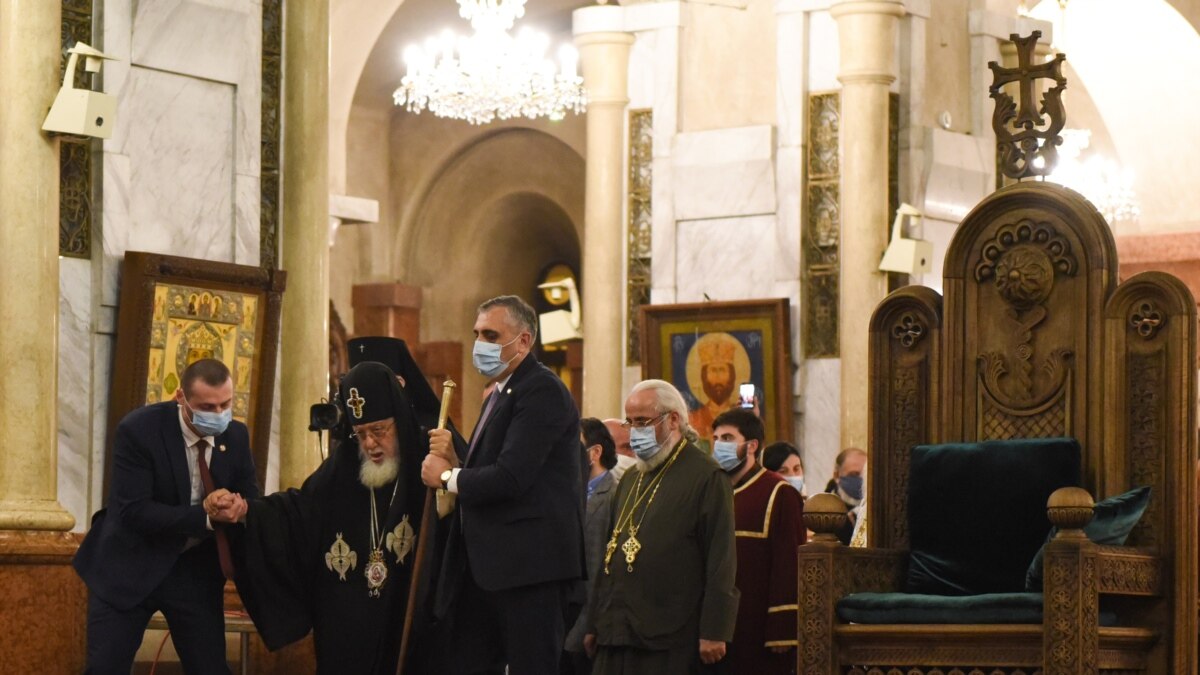 On May 3, during his Sunday sermon, Bishop Saba told his congregation that a vaccine for the new coronavirus "will serve not so much to combat the virus as to enslave humans, control people, subdue them" and that it will become a tool in the hands of the devil "to sway people and easily seduce them into sin." Two days later, Bishop Anton spoke with journalists who asked him to comment on Bishop Saba's claims. He said: "It has been transpiring that the current pandemic – as I have been told and also, I watched some programs I was sent via WhatsApp yesterday – is, after all, a bluff. If this pandemic turns out to be a bluff, what would you say then? If it becomes established that this pandemic is a trick, and the world admits that it is a bluff, will that not prove the truth of what that bishop said!" Describing the pandemic as a "bluff" or "trick" is false. The global scientific community has joined forces to develop a vaccine against SARS-CoV-2, the virus that causes COVID-19 respiratory syndrome. While the world awaits the results, a segment of the Georgian clergy has begun questioning the vaccine and the benefits of vaccinations in general. Meanwhile, Russia has been promoting anti-vaccination conspiracy theories targeting billionaire tech entrepreneur and philanthropist Bill Gates. The Bill and Melinda Gates Foundation plans to build factories to produce the COVID-19 vaccine once it is ready. Among the bogus Gates conspiracy theories are claims that he wants to inject people with surveillance microchips and knew about the pandemic before it emerged in December. In fact, Gates has advocated for pandemic preparedness for years. His foundation has spent millions on the prevention and treatment of contagious diseases and distributed vaccines in developing countries. In his 2015 TED talk, given amid the Ebola virus outbreak in West Africa, Gates warned that a highly infectious virus, rather than a nuclear war, would be the greatest global catastrophe that could claim millions of lives. After the outbreak of COVID-19, Gates contributed a quarter billion dollars to several coronavirus vaccine initiatives. In April, Georgian media outlets sympathetic to Russia made conspiratorial references to an "Event 201 exercise" and "Innovating to zero" in an apparent attempt to prove that Bill Gates knew about the coronavirus outbreak in advance. "Event 201" was a tabletop exercise, co-hosted by the Bill and Melinda Gates Foundation in October 2019, to illustrate the need for pandemic preparedness. No evidence exists tying this exercise to the current COVID-19 pandemic. Other Georgian Orthodox Church clerics have also made misleading claims. On May 3, one stated that if COVID-19 "provokes death of people that does not mean that the virus killed them but that the time for them to pass away has come." Another cleric claimed on May 6 that COVID-19 does not directly kill people but instead aggravates underlying diseases that kill them. That is misleading: many of those with COVID-19 who have died did not have underlying or complicating conditions. The Georgian clergy has been defiant since the start of the outbreak, when the Georgian Orthodox Church rejected a recommendation to give holy communion using disposable rather than shared spoons. "Wine, which turns into blood after it is poured into the chalice, is a natural antiseptic. A spoon cleansed in wine becomes free of bacteria. Dipping [the spoon] in wine is the same as dipping in alcohol," Bishop Nikoloz said on March 1. The World Health Organization says only hand sanitizers with more than 60 percent alcohol effectively kill the virus. The alcohol content of wine is 20 percent or lower. Although the Georgian Orthodox Church required social distancing during the Easter holidays, it continues to give holy communion with a shared spoon. On May 10, Bishop Gerasime said that while the church cannot accept the vaccine outright, it will take the matter up for discussion. "A commission will be set up to consider and discuss these topics, whether it is positive, negative, acceptable or unacceptable and then we will take a decision," he said. According to the WHO, vaccines prevented at least 10 million deaths between 2010 and 2015 and protected many millions more lives from illness.  |
| Polygraph’s revival may be about truth rather than lies - The Guardian Posted: 21 Jan 2020 07:56 AM PST 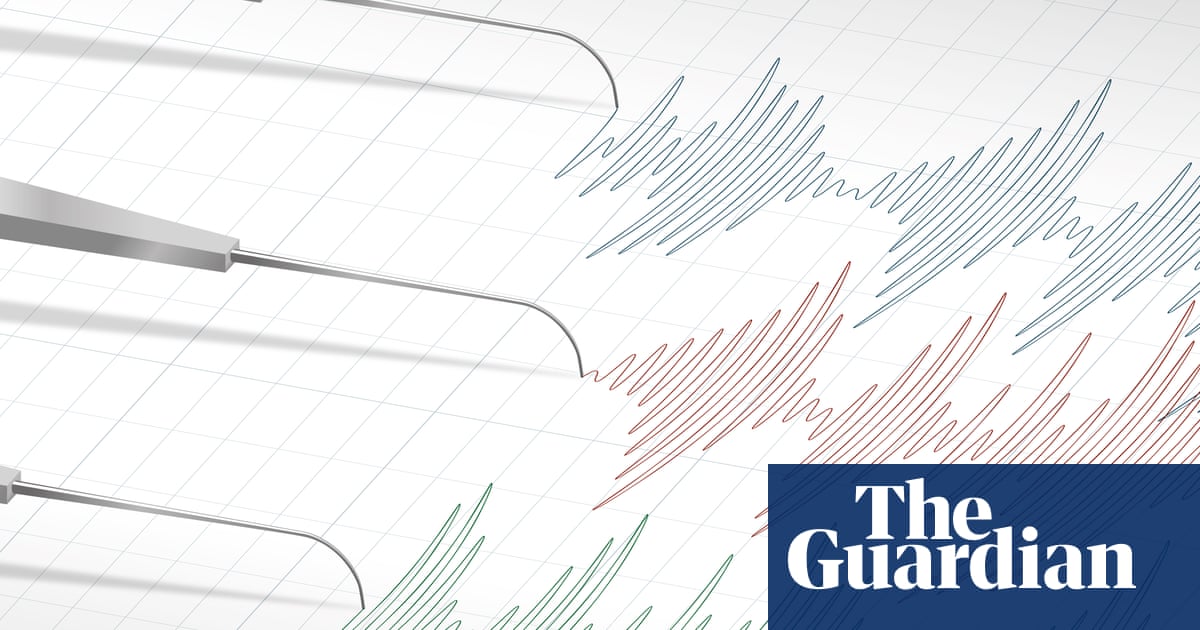 Telling lies is stressful. That's the basic logic of a polygraph test: that the stress of deceiving others will manifest itself through fleeting physical responses that may be imperceptible to another person but can be measured by a machine. Typically, a polygraph records blood pressure, galvanic skin response (a proxy for sweat), breathing and pulse rate. There is a fairly standard protocol for the lie detector examination. The examiner will mix specific questions relevant to a case – "Did you commit a robbery on 29 March?" – with a series of control questions. Crucially, the control questions are also designed to be anxiety-inducing – for instance: "Have you ever stolen from a friend?" Along the way, the subject will be reminded that the machine can distinguish truth from lies and that they must respond truthfully. In theory the control questions, designed to be difficult to answer with absolute honesty, will generate some baseline level of stress. For an innocent subject, the assumption is that these questions will be more stressful than the relevant ones, where a straightforward denial can be given. For a guilty party, the relevant questions are expected to be more stressful to answer. So a liar is expected to have higher physiological responses to relevant questions than to control questions, and someone telling the truth will show the reverse pattern. A similar response to each set is judged inconclusive. Many experts question whether this works with any reliability in practice. "Polygraphs work very well as physiological measures – scientific measures of changes in your body as you experience different emotions," said Prof Sophie Scott, a neuroscientist at University College London. "However, they are not scientifically validated as reliable measures that someone is lying. "Indeed, there are no reliable measures of lying, full stop, which is why the police use cognitive measures such as asking people to describe events backwards, to spot inconsistencies as liars start to get things wrong." Prof Chris Chambers, a psychologist at Cardiff University, put it more bluntly: "Polygraphs are bullshit. They have always been bullshit and they will always be bullshit." An exhaustive review of the scientific evidence by the US National Research Council in 2003 indicated that although the polygraph performs above chance, studies had found wildly differing accuracy rates. Some gave accuracies of 85% when evaluating genuinely guilty people, which proponents of the polygraph say underlines its utility. However, the review also highlighted the potential for high false positive rates ( some studies found almost half of innocent people were identified as liars), and it pointed out that people can train themselves to beat a polygraph. It concluded that the US government should not rely on polygraph examinations for screening prospective employees or to identify spies or other national security risks, because the test results were simply too inaccurate. Another analysis published last year reached broadly the same conclusions. Prof Albert Vrij, a psychologist at the University of Portsmouth whose research focuses on deception and lie detection, said overconfidence of examiners in the accuracy of lie detectors was a common theme. "Although they often acknowledge that the test is not always accurate, they often seem to think that other examiners make incorrect judgments rather than they themselves. You never hear stories from polygraph examiners where they got it wrong." Despite their notable shortcomings, lie detectors have had something of a renaissance in the UK in the past decade. Last year the Ministry of Justice launched a three-year pilot of mandatory polygraph tests on convicted domestic abuse offenders released on licence. Tests have also been given to serious sex offenders on parole in England and Wales since 2007, and since 2014 mandatory tests have been added to some offenders' release conditions. Vrij said the reliability of lie detectors in these latest applications was even more unclear. Polygraphs were designed to test someone's involvement in a known crime that occurred in the past. In some cases, sex offender testing could involve open questions about future intentions. "To use sex offender testing as a justification to use it in terrorist cases is odd," said Vrij. "Of course, it gets further away from its original design as the 'crime in question' is no longer a crime committed in the past. To simply introduce the test in an entirely different setting is too far stretched." So the science is shaky. But in the real world, the question of whether lie-detector tests work has another component: irrespective of their accuracy, do they make people tell the truth? There is evidence to support this, including a 2007 study by scientists at the University of Kent which showed that sex offenders who were attached to a fake polygraph admitted to far more thoughts that would place them at risk of future offending than in a standard interview. Perhaps these observations, rather than a disregard for scientific evidence, are the basis of the latest polygraph rollout. Prof Thomas Ormerod, a polygraph expert at the University of Sussex, said: "The use of lie detector tests in this context will, at best, be a waste of police resources, and at worst will exacerbate problems associated with terrorism. Their use will give the public false confidence that they are being protected, while for terrorists who take and pass the tests, it gives them a free pass out of the legal system and cover to carry out attacks unimpeded. Moreover, for genuinely reformed offenders or innocent people implicated in terrorist activity, use of a technique that cannot be used in UK courts as admissible evidence will likely appear discriminatory." "It seems a missed opportunity that the UK government is failing to use the research results it has contributed to funding, preferring instead to rely on techniques that seem to offer a magic technology but in fact are deeply flawed and potentially dangerous."  |
| You are subscribed to email updates from "how to pass a polygraph" - Google News. To stop receiving these emails, you may unsubscribe now. | Email delivery powered by Google |
| Google, 1600 Amphitheatre Parkway, Mountain View, CA 94043, United States | |

Comments
Post a Comment