Polygraph Tests Are Notoriously Unreliable. They're Even Worse in Cases of Sexual Assault. - Mother Jones
Polygraph Tests Are Notoriously Unreliable. They're Even Worse in Cases of Sexual Assault. - Mother Jones |
- Polygraph Tests Are Notoriously Unreliable. They're Even Worse in Cases of Sexual Assault. - Mother Jones
- Police Officer Candidate (Certified and Non-Certified) Job - CITY OF BOCA RATON - BOCA RATON, Florida - Police News
- Inside the Black Mirror World of Polygraph Job Screenings - WIRED
| Posted: 05 Apr 2019 12:00 AM PDT 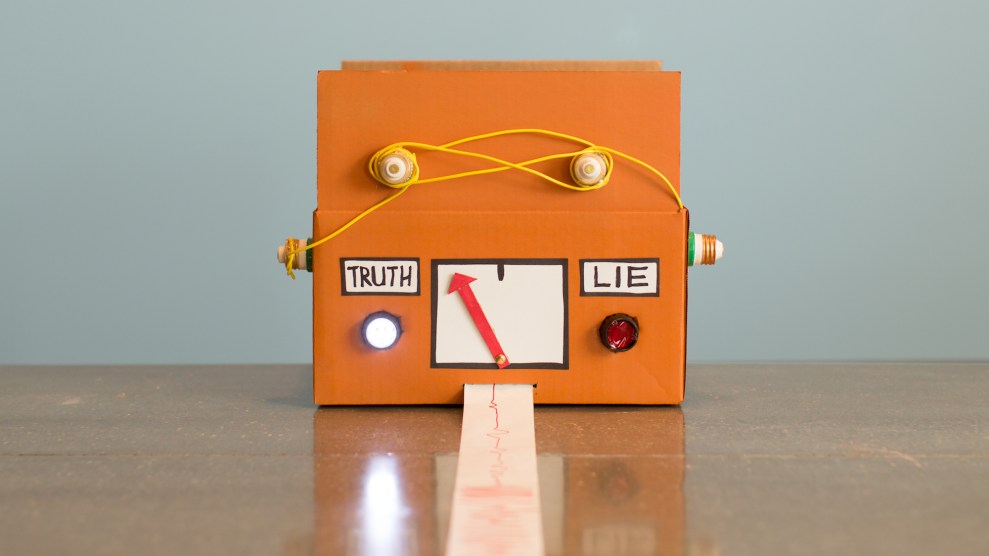 RichVintage/Getty Images Last Friday, as the two women who have accused Virginia Lt. Gov. Justin Fairfax of sexual assault prepared to go on CBS This Morning and recount their stories to anchor Gayle King, Fairfax was traveling to a Washington, DC, law office to sit down with a very different type of interviewer: polygraph examiner Jerry Hanafin. Hanafin, a retired FBI agent, had administered a polygraph test last fall to Christine Blasey Ford, who had just accused then-Supreme Court nominee Brett Kavanaugh of assaulting her. Those results appeared to support her case. But this time, with Fairfax, Hanafin was giving the exam to someone on the other side of a sexual violence allegation. His report, obtained by CBS and published Wednesday, concluded that Fairfax's physiological indicators—such as perspiration, breathing, and heart rate—were "not indicative of deception" when he denied engaging in "non-consensual sexual activity" with either of his accusers, Vanessa Tyson and Meredith Watson. Fairfax, for his part, seems to have taken the results as an exoneration: "I feel so strongly regarding my innocence that I submitted myself to polygraph tests for each of the accusations against me," he said in a statement to CBS. "I passed those tests. I did not assault either of my accusers." But what does the polygraph exam—a controversial technique whose results are typically not admissible in court—really tell us about Fairfax's responsibility for the alleged sexual assaults? According to Leonard Saxe, a social psychologist at Brandeis University who has studied the accuracy of polygraphs for decades and led a congressional study on their efficacy in the 1980s, the exam is basically useless in determining if someone is telling the truth. "The test is just not supported by either theory or data," Saxe argues. "Somebody who lies, maybe they sweat a lot. They may look away, and so on. But the other possibility is also true. If you're arrested for some serious crime, if your life is on the line, you may be nervous, you may be sweating just because you're concerned about being truthful." That's the crux of most criticisms of polygraph exams (and there are many): that they measure signs of nervousness, and being nervous can result from any of dozens of indistinguishable factors—guilt, yes, but also fear that another kind of wrongdoing will be discovered, or even anxiety about having to take an exam considered by many to be junk science. "The lie detector is not a lie detector—it's a fear detector," Saxe says. That's part of the reason sexual assault victim advocates have typically discouraged investigators from asking victims to take polygraphs: The physical reactions that may come along with discussing a traumatic event, like a sexual assault, can produce false indicators that the person being tested is lying, according to the National Sexual Violence Resource Center. It's also the recommendation of the International Association of Chiefs of Police not to polygraph sexual assault victims, because it can alienate them and destroy their trust in police, lowering the odds of a successful investigation. But on the other side, lie detector tests are perhaps even more flawed when used on those accused of sexual misconduct. Mary Koss, a public health professor at the University of Arizona who has studied sexual violence for decades, argues that polygraph exams are particularly ineffective in testing the truthfulness of a person accused of sexual assault because "most rapists, even those in prison, do not perceive what they did as rape no matter what others saw." She adds, "If you truly believe something to be true, even if it is a misperception, you can pass a polygraph." Indeed, research shows that most offenders will not admit to "rape" or to "sexual assault," even at the same time as they cop to behavior that amounts to it. That's according to Kevin Swartout, a Georgia State professor of psychology, who studies perpetrators of sexual violence and the type of people most likely to commit those crimes. When Swartout surveys men about whether they've committed sexual violence, he has to carefully design his questions to account for this problem. "If you were to ask somebody, 'Did you penetrate someone's vagina with your penis when they did not want to?' They might say, 'Yeah, I did that, when I was in college,' or whatever." But when you ask if they committed rape? As Swartout explains, "They'll say, 'Oh, no, no, I've never, I've never done anything like that.'" Once, he says, when he asked about 350 college men a similar series of questions, about 30 admitted to behavior that the FBI would label rape. But only one person openly said yes, he had committed rape. The reason boils down to our tendency to give ourselves a pass when we're evaluating our own behavior, especially compared to others. Labels like "rapist," Swartout says, "carry a special meaning above and beyond their actual definition. It's basically the worst thing that you can be labeled." And the discrepancy between the facts and perpetrators' self-regard is exacerbated by rape myths—such as the belief that rape is usually a stranger-leaps-out-of-the-bushes situation—that reassure men who have committed sexual violence against a friend or intimate partner that they don't qualify as a perpetrator. All of this gets murkier when the behavior in question involves a disagreement over consent, not the actual sexual behavior in question. According to Maia Christopher, executive director of the Association for the Treatment of Sexual Abusers, some perpetrators may claim they didn't "coerce" or "force" anybody to have sex. "That may very well be true," she says, but in cases of statutory rape, for instance, "that doesn't change the fact that's sexual assault." Same goes when there's a lack of affirmative consent. On the flip side, Dan Sosnowski, a former president of the American Polygraph Association who has been conducting polygraphs for 39 years, vociferously defends the accuracy of polygraphs, even in sexual assault cases—if they're administered by a good enough examiner. "There's an art and science of the interview," he says. "If something really, really happened, it's written to your memory. It's written to your hard drive. I just have to give you a way to access that." He also estimates that about half of the sexual assault criminal defendants he has tested over the years, usually at the behest of their private defense attorneys, maintained their innocence in exams and passed the polygraph. (If they were telling the truth, that would mean his clients experienced an extraordinarily high rate of false criminal sexual assault accusations, which experts estimate happen in just 2 to 8 percent of cases.) Yet even Sosnowski says there's not enough information in Hanafin's report on Fairfax's polygraph test to say the public should accept its results at face value. Of particular concern, he says, are the length and lack of specificity in the questions asked of Fairfax, including, "Did you engage in any non-consensual sexual activity with Vanessa?" as well as the same question regarding Watson. Fairfax answered "no" in both instances, but those are not useful questions, Sosnowski explains, unless the examiner has clearly defined "sexual activity" beforehand. A separate exam question, he says, should address the alleged lack of consent, like, "Did you have an express, complicit, consensual agreement?" Sosnowski adds, "We have to be very explicit when we cover those issues." He also believes other questions asked of Fairfax, such as, "Was Vanessa crying at any time she was in your hotel room?" skirt the heart of the allegations against him, which in this case include alleged forced oral sex in his 2004 Democratic National Convention hotel room. Whether Tyson was crying, he explains, "doesn't address anything to do with any sexual contact." There are other reasons to take a polygraph exam like Fairfax's with a grain of salt; for instance, people who have been asked repeatedly about a subject will have a more moderate emotional reaction to it, lessening the likelihood that a polygraph will detect an anomaly even if they're lying, Saxe says. No matter how you read Fairfax's polygraph, it's far from the end of the road for the investigation into his conduct; the lieutenant governor himself is calling for further inquiry into both allegations against him. "Law enforcement authorities in Boston and Durham have demonstrated a sensitivity to those who wish to report a crime," he suggested in a statement to CBS. "A civil lawsuit as well would provide a forum for assessing the credibility of all parties." Putting the final determination of guilt in any sexual violence case in the hands of police is far from a perfect solution. Then again, neither is a polygraph. Some polygraph examiners who work with police can successfully use the exam to intimidate suspects into a confession, or into giving up information, according to Saxe. But in determining guilt or innocence, "it's not useful," he adds. That said, polygraphs often have success on a different measure: pushing a favorable narrative with the public. For public figures like Fairfax, Saxe says, "just the fact that they were willing to take a polygraph may suggest to people they have nothing to hide—and they were being truthful."  |
| Posted: 01 Oct 2019 12:00 AM PDT  GENERAL DEFINITION OF WORK: Performs difficult professional work to protect and serve the citizens through enforcement of city ordinances and state and federal laws, prevent crimes, apprehend criminals, and provide aid and assistance. Responds to calls for service for emergencies and non-emergencies; Prepares reports, affidavits, and other documentation as required; Conducts investigations of calls for service and crime scenes; Arrests and processes persons committing felonies/misdemeanors and city code violations; Patrols business and residential areas, and works with CRIME WATCH coordinator; Enforces laws, investigates accidents and directs traffic. Testifies at depositions and in court; Performs first aid and CPR. Work is performed under regular supervision. Performs related tasks as required. KNOWLEDGE, SKILLS AND ABILITIES: Thorough knowledge of federal and state law and municipal ordinances; Police Department policies and procedures; and geography and demography of jurisdiction and related crime situation. Proficient in use of police equipment. Must be able to read, write and speak clearly in English language. Must have mental capacity and ability to make deadly force decisions. Must be available to be on call 24 hours a day. PHYSICAL DEMANDS: Must be able to wear hard hat/helmet, safety glasses, goggles, bullet-proof vest, hearing protectors, face shield, and gloves. Exposure to extreme temperatures, animals/insects, confined spaces, heights, noise, dust, vapors, fumes, mist, smoke, toxic metals, poisons, irritants, and blood borne pathogens. EDUCATION AND EXPERIENCE: •Must be at least 19 years of age. •Must have at least one of the following:
•Must have no convictions of a felony or misdemeanor involving moral turpitude.  |
| Inside the Black Mirror World of Polygraph Job Screenings - WIRED Posted: 01 Oct 2018 12:00 AM PDT .jpg) Christopher Talbot thought he would make a great police officer. He was 29 years old, fit, and had a clean background record. Talbot had military experience, including a tour of Iraq as a US Marine, and his commanding officer had written him a glowing recommendation. In 2014, armed with an associate degree in criminal justice, he felt ready to apply to become an officer with the New Haven Police Department, in his home state of Connecticut. Talbot sailed through the department's rigorous physical and mental tests, passing speed and agility trials and a written examination—but there was one final test. Like thousands of other law enforcement, fire, paramedic, and federal agencies across the country, the New Haven Police Department insists that each applicant take an assessment that has been rejected by almost every scientific authority: the polygraph test. Commonly known as lie detectors, polygraphs are virtually unused in civilian life. They're largely inadmissible in court and it's illegal for most private companies to consult them. Over the past century, scientists have debunked the polygraph, proving again and again that the test can't reliably distinguish truth from falsehood. At best, it is a roll of the dice; at worst, it's a vessel for test administrators to project their own beliefs. Yet Talbot's test was no different from the millions of others conducted annually across the public sector, where the polygraph is commonly used as a last-ditch effort to weed out unsuitable candidates. Hiring managers will ask a range of questions about minor crimes, like marijuana use and vandalism, and major infractions, like kidnapping, child abuse, terrorism, and bestiality. Using a polygraph, these departments believe, increases the likelihood of obtaining facts that potential recruits might prefer not to reveal. And like hundreds of thousands of job candidates each year, Talbot was judged to have lied on the test. He failed. New Haven allows failed applicants to plead their case in public before the Board of Police Commissioners. So in February 2014, Talbot sat down and recited his experiences with lie detectors. He had first applied to the Connecticut State Police and was failed for deception about occasional marijuana use as a minor. He then tried again with a police department in New Britain, where a polygraph test showed him lying about his criminal and sexual history. This time he had failed the New Haven polygraph for something cryptically called "inconsistencies." "[But] I'm not hiding anything," he said at the hearing. "I was being straight and honest and I've never been in trouble with the law. I'm not lying about anything." Electronic lie detection is a peculiarly American obsession. No other country carries out anywhere near the estimated 2.5 million polygraph tests conducted in the US every year, a system that fuels a thriving $2 billion industry. A survey by the Bureau of Justice Statistics from 2007 found that around three-quarters of urban sheriff and police departments use polygraphs when hiring. Each test can cost $700 or more. Apply to become a police officer, trooper, firefighter, or paramedic today, and there is a good chance you will find yourself connected to a machine little changed since the 1950s, subject to the judgment of an examiner with just a few weeks' pseudoscientific training. Last week the technology burst into the news when Christine Blasey Ford, the woman who accuses Supreme Court nominee Brett Kavanaugh of sexually assaulting her as a teenager, said that she had taken a privately administered polygraph test to help bolster her account of the incident. "While not admissible in court, they're used by various governmental agencies and many people believe in their abilities," Douglas Wigdor, a former prosecutor who now represents victims in sexual harassment and sexual assault cases against high-profile men, told The Washington Post.  |
| You are subscribed to email updates from "polygraph definition" - Google News. To stop receiving these emails, you may unsubscribe now. | Email delivery powered by Google |
| Google, 1600 Amphitheatre Parkway, Mountain View, CA 94043, United States | |


Comments
Post a Comment