Faith News: June 26, 2019 | Faith - Tahlequah Daily Press
Faith News: June 26, 2019 | Faith - Tahlequah Daily Press |
- Faith News: June 26, 2019 | Faith - Tahlequah Daily Press
- Internet preachers rise as more worshipers migrate online - The Christian Post
- Stop using the Bible as a weapon of hate against LGBTQ community - Houston Chronicle
| Faith News: June 26, 2019 | Faith - Tahlequah Daily Press Posted: 25 Jun 2019 09:28 AM PDT  Tahlequah First Baptist We've all had someone wrong us or mistreat us at some point in our lives. But how are we to handle someone we consider our enemy? Jesus had very specific direction on how we are supposed to treat people who have wronged or mistreated us. And how he tells us to treat people who have wronged us is very difficult to do. He said to love them. It would be so much easier to tell them off or to ignore them every chance we get, but Jesus said to love them. How do we love our enemies? In Luke 6:27-29, the Scripture says, "Do good to those who hate you, bless those who curse you, pray for those who mistreat you. If someone slaps you on one cheek, turn to them the other also. If someone takes your coat, do not withhold your shirt from them." Jesus tells how our enemy might treat us. They will hate you and will use damaging words or conduct to hurt you. They have a persecuting spirit. They may curse you or wish evil or ruin on you. They basically mistreat you in every way they can. In the verses above, when you slap someone, it causes physical pain and hurt, and when you take someone's coat, it is stealing someone's property. Property can be physical or emotional because it refers to something being taken from you. Our enemies will have ill toward us, hurt us, insult us and steal from us, yet Jesus wants us to love them by doing good to them, blessing them, loving them and praying for them. It seems impossible and our nature wants us to do the opposite. So, what do we do when something seems impossible? We can ignore what Jesus told us or we can go to him and talk to him and ask him how we should handle the situation, and ask him and trust him to handle our enemies through us. Sunday services are: early worship, 8:15 a.m.; Sunday school, 9:30 a.m.; late worship, 10:45 a.m. Please come and join us for a time of praise and worship to our Lord Jesus Christ. Terri Fite CCF Welcome to Community Christian Fellowship, a nondenominational, Bible-preaching, teaching Church of God. The church is on State Highway 82 South at Keys. Prayer service is tonight at 6 p.m. and, as always, come as you are. Regular services are: Sunday school, 10 a.m.; worship service, 11 a.m.; and Wednesday and Sunday services, 6 p.m.. "By little and little I will drive them out from before thee, until thou be increased, and inherit the land" (Exodus 23:30). While speaking to the Israelites in the wilderness concerning their entering into the promised land, the Lord told them that he was going to drive the other nations out of the land little by little. He was not going to drive them all out at one time. It would be by the conquering of one city after another. Could God drive them all out at once? Sure he could, but he was not going to. He was going to do it through a process. At salvation there is something that takes place in our lives right then, we become a new creation. But that is only the beginning, from there we go through a process. God could totally deliver us from all the vain imaginations of our heart, from the lusts of the flesh, from our flawed thinking, but he doesn't. The destruction of our biggest enemy, our own flesh and transformation into the likeness of Christ, takes place through a process, a daily process of denying self of renewing our mind and of presenting ourselves before the Lord as living sacrifices. How nice it would be if he would just instantaneously change at salvation all the things about us that have to be put to death. But, instead, we have to do that on a daily basis as we encounter each one. So today, remember that you are in a process and every "enemy" you encounter has to be dealt with then and "driven out." We are in a process; I must decrease and he must increase. Jenny Dameron Unitarian Universalist Many of us say we are different and no one really understands our life. Words such as "justice, equity and compassion" may seem hollow when one feels offended with no where to turn. These feelings can sometimes be the cause for a person to make drastic decisions. In 1969, James Stoll became the first ordained minister of an established denomination to come out as gay. This convinced the Unitarian Universalist Association to pass the first ever gay rights resolution in 1970. Harvey Milk would later be assassinated in 1978 as the mostly pro-LGBT politician in the United States. In 2003, the U.S. Supreme Court ruled that any law not allowing private homosexual activity between two consenting adults was unconstitutional. The word "homosexual" is no longer prevalent since the Gay & Lesbian Alliance Against Defamation found the term offensive due to its descriptions in clinical history. Society has measurably evolved towards the realization that there is an inherent worth and dignity in every person and that we will encourage spiritual growth in our children and our houses of faith. Join us every Thursday at 11 a.m. for our UUCT Mid-Week Gathering for discussion, sharing and laughter, and then join us for Adult Forum at 10 a.m. Sunday, and our service at 11 a.m. Find out more about us on Facebook at "Unitarian Universalist Congregation of Tahlequah, 104 N. College Ave." Kelly Anquoe Barber Baptist Church Psalm 146:1: "Praise ye the Lord. Praise the Lord, oh my soul." Guest preacher Tim Crawford brought the morning message about how our God is able. Hebrews 11 describes what faith is. 1 Corinthians 12:4-11 lists the gifts of the Holy Spirit, including faith. All of these gifts are given by God for use within the body of Christ. There is the measure of faith that all of us have; then there is the kind of faith that understands the faith needed to move a mountain: A faith that doesn't look back. Daniel 3 took place in 394 BC, after Daniel, Hananiah, Mishael, and Azariah had taken captive the Babylonians from their Jerusalem homeland. They were taught and trained so well in their faith that they did not yield to the customs or gods of their captors at any time. The kingdom of Babylon was a pluralistic nation. They conquered many nations and adopted their beliefs and customs counting them relevant in their own lives. How similar is this to today's culture? Any belief that someone or a group has is OK and considered relevant immediately. About 14 years before their capture there was a revolt against the Babylonian king Nebuchadnezzar which was the reason for the harsh decree in chapter 3. Daniel 3:5-6: "That at what time ye hear the sound of the cornet, flute, harp, sackbut, psaltery, dulcimer, and all kinds of music, ye fall down and worship the golden image that Nebuchadnezzar the king hath set up; And whoso falleth not down and worshipeth shall the same hour be cast into the midst of a burning fiery furnace." Daniel and his three friends bowed not and the king repeated his threat just in case they wanted to reconsider their options. How often do we take the out? We rationalize our choices; "God knows my heart…" Verses 16-17: "If it be so our God whom we serve is able to deliver us from the burning fiery furnace and he will deliver us out of thine hand, O king. But if not, be it known unto thee, O king, that we will not serve thy gods nor worship the golden image which thou hath set up." These young men had not been able to worship in a synagogue or with their people; they were able to say and testify, "Our God is able." God did not save them from the fiery furnace; God let them go through it and brought them out unburned. God desires his people to have the kind of faith. A faith that will say, believing, "My God is able….," you fill in the rest. Join us for Vacation Bible School, "In The Wild" beginning this week, Sunday-Friday, 6-8 p.m. Marta Vann God's Mountain Church Services opened with prayer led by pastor Carl Clark. Kristi Ward and Nicolas Clark sang "He's a Chain Breaker" and "Let's All Go Down to the River." Sandra Clark took the juniors to class. The teens stayed in the sanctuary. Nicolas Clark taught the adult class on Satan's trap of lust. The spirit of lust is a snare of the devil. Flee from the temptation. Read Proverbs 7:6-26. No. 1: Lust starts with desire. No. 2: Deception. Lust can never satisfy. Only love can do this. No. 3: Lust always leads to death. No. 4: Deliverance. Jesus sets us free from the snare and trap of Satan. He overcame death hell and the grave. Sandra and the children returned to the sanctuary. Prayer requests were taken, followed with prayer. The congregation sang selections: "I've Never Been Sorry," "Just a Little Talk with Jesus" and "Amazing Grace." The booster band sang "I'm in the Lord's Army" and "I Just Wanna be a Sheep." Ronnie and Karen Houston, accompanied by Buddy Clinton, sang "Victory in Jesus." Rev. Carl Clark sang "The Old Man's Dead." He ministered from John 11:35-37. Jesus wept because he loved mankind so much. We serve a savior that can be touched by the feelings of our infirmities. Jesus was moved with compassion when he saw Lazarus' sisters weeping at his death. Jesus wept. Then, said the Jews, "Behold how he loved him." We know that the love of God surpasseth all knowledge. Service closed with an altar call and two more souls were added to the kingdom today. Pastor Carl Clark dismissed the congregation in prayer. Attendance was 54. Several of our congregation were not able to make it out due to the flooding. We also had to reschedule our baptism service to July 7. Wednesday evening Bible study is at 7 p.m. Everyone is welcome. Lula Thompson Peggs Community Church Morning services June 23 opened in prayer led by Brother Mike Parish. The devotional was read from John 1:1-18, and the first song was "There Shall Be Showers of Blessing." We had 82 in attendance this rainy, rainy day. Get well prayers and wishes go out for John Meigs and Derek Pigeon, as well as all those on the prayer chain throughout the week and earlier. Our prayers and sympathy go out to the family of Brenda Littlefield on her recent passing. May God ease your pain and soothe your grief. The appreciation dinner for the Vacation Bible School workers is this Saturday, June 29, at 5 p.m., and will be held at the Country Cottage in Locust Grove. All VBS workers this year will have their meal paid for; if they bring a guest (spouse, etc.), that guest will be responsible for paying for their meal. The annual Peggs Fire Department Independence Day celebration will be held on July 6, beginning at 6:30 p.m. behind the Community Church, as it was last year. There will be games, inflatables for the kids, live music, food, and fireworks at dark. Attendance is free, but there will be a small charge for the food stuffs. Our church will be holding a fellowship supper and singing on July 12 beginning at 6:30 p.m. Come and join in the fun. Brother Rex took the reading for his message this morning from Revelation 3:14-22, the letter to the angel of the church of Laodicea. In reading these passages, we find the church there has been found to be "lukewarm," neither hot nor cold. The Lord told them if they remained lukewarm, he would "spue them from his mouth." From this, Brother Rex began to compare a church to a museum. Statues on a museum are just that, statues. They may certainly depict whomever, a president, movie star, or the like, but there is no life. The statues have eyes, but they can't see; ears, but they can't hear; mouths, but can't speak. There is no life, no warmth, no worship of the Creator because there also are no feelings. It is a nonliving replica of life. A church, however, is not just a building, but a living, breathing being for the express purpose of worshipping and serving God. A church is, or should be, life for its congregants. The church must have seeing eyes, hearing ears, deep and fulfilled feelings of worship, the ability to worship without embarrassment, and living always through the Holy Spirit left to us when Christ ascended away. And so we come to today's question: Do you attend church, or do you visit a museum with the same figures in the same places each week? The answer is not only up to us, church, but our eternal lives depend on it. Kay Cordray First Apostolic Sunday morning, June 23, services opened with prayer and songs of praise to our Savior, Jesus Christ. "God Is Omniscient" was taken from Daniel 2:19-23, 38-41, 44-45. Daniel was a descendant of the royal family of David. He had two outstanding characteristics in his service to the Lord: an established, consistent prayer life and guidelines, or boundaries, over which he would not step as he separated himself from the ungodly world. He refused to partake of food offered to idols or anything else that was not of God. We must, likewise, set boundary lines that we might become a vessel of honor in the house of God. If we purge ourselves of things of this world and not over-involve ourselves, lest we miss church, we will be a vessel of honor, consecrated and meet for the Master's use. Our prayer life is essential, as are strong convictions and standards of holiness in our walk with God. When temptations come, we need to have our praying taken care of, for the lack of prayer, or communication with our Lord, will lead us into temptation. Daniel was called before the king to not only interpret a dream, but also to recall the dream that the king had. Because of Daniel's faithfulness to God, even in times of captivity, God showed Daniel both the dream and the meaning of it. He told the king that the image with feet of clay and iron, which represented the fourth kingdom, would eventually be broken up by a stone cut out of the mountain without hands, and scattered as pieces of chaff in a summer wind. Daniel was able to see ahead until the Jews would be taken into captivity, where many would fall by the sword. Jerusalem shall be trodden down until the time of the Gentiles is over. The Kingdom that is to be set up over – and consume – all the kingdoms of this world and shall stand forever, is the Kingdom of God. That stone cut without hands is Jesus, God manifest in flesh. In these last days, those that will be with him are called and chosen and faithful. Let us make our calling and election sure as his soon return is imminent. Feel welcome to visit any time: Wednesday at 7:30 p.m., and Sunday at 10 a.m. and 6 p.m. The church is two miles south of "Speedy's" on Welling Road. For information, call 918-457-9498 or 918- 401-0368. Also, visit our website at facwellingok.org. Nancy Walker Cookson United Methodist The congregation and guests welcomed Cookson United Methodist's Church new pastor, Reverend Rachel Parrott. A new chapter in the life of the church has begun. Come as you are to the corner of Highway 82 south and Cookson Bend Rd. The physical address is 21685 W Cookson Bend Rd. Morning worship starts at 10 am. Small group classes at 8:45. This Sunday will be the 5th Sunday Potluck following worship. Everyone is welcome. Last Sunday, scripture readings were from Jeremiah 29: 11-13 and Matthew 20: 16-20. Worship began with the continuation of the passing baton from Staff-Parish Chairman to Pastor Rachel. Pastor Rachel began her message about stories. Listening about other people's stories is how you get to know each other. She shared her faith journey along with her calling for ministry. Jeremiah 29: 11-13 is one of her favorite scriptures. The Great Commission is Matthew 20: 16-20. Everyone needs to seek to grow as disciples. Jesus promises, I myself will be with you every day until the end of this present age. Cindy Ballew  |
| Internet preachers rise as more worshipers migrate online - The Christian Post Posted: 24 Jun 2019 04:08 AM PDT 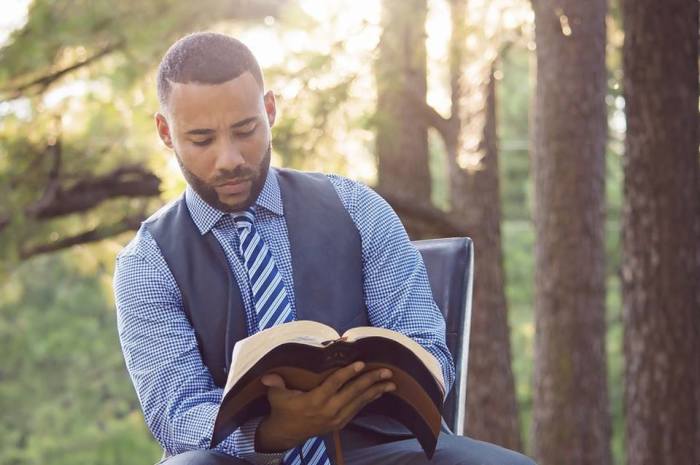 With more than 800,000 followers on Facebook, Chicago-based internet preacher and U.S. Army veteran, Marcus Rogers, has an audience on social media that's much greater than popular established churches like Rick Warren's Saddleback Church, and is just about 300,000 shy of Joel Osteen's Texas-based Lakewood Church's 1.1 million followers. "I am just a nobody trying to tell everybody about somebody who can save anybody! His name is Jesus," Rogers, who turns 33 next month, boldly declares in the introduction to his page which you must follow in order to get the latest updates. With one click his latest words of wisdom for Christian living are delivered in written posts and videos which often rack up millions of views. "People choose to follow people who are portraying the version of Christianity that they are comfortable with," he warned in a veiled shot perhaps about the growing and diverse industry of internet preachers and online ministries. "Everybody claiming to be a Christian isn't a Christian. Everyone claiming to have a word [from] God doesn't really have one. It's dangerous to just follow anybody claiming to be a Christian." In recent years, various social platforms and other online technology amplified the voices of a variety of controversial internet preachers ranging from more conservative ones like Rogers, to the profane like, "The Cussing Pastor," Thaddeus Matthews. And as the population of the unchurched continues to grow, some church experts say their data reflect a growing engagement among the faithful with ministries online, with some even choosing to fellowship exclusively on the internet. Lucinda Rojas Ross, central team leader of communications at the Craig Groeschel-led Life.Church, which spans 32 campuses in 10 states, says since starting their Church Online platform more than 10 years ago, engagement has grown exponentially. "Our decision to create Church Online in April 2006 was driven out of our heart to reach people where they are. At Life.Church, we believe God has called us to use the technology available to us today to spread the Gospel to as many people as we can. There are more than 7 billion people on this Earth, and as long as there is one hurting person who doesn't know Christ, we know our job isn't done," Ross shared with The Christian Post in a recent statement. "Life.Church Online has allowed us to reach people who likely would have never walked through the doors of a church building. Beyond what we ever could have hoped or imagined, lives are being transformed around the globe. And we continue to see that number increase over time. So far this year on average, we're reaching more than 500,000 people each week through Church Online, which includes live.life.church, Facebook, YouTube and Twitch," she added. She explained that Life.Church's online community is made up of different types of people including those who: are outside the physical reach of the church; prefer to explore their interest in spirituality in an online context; people who are a part of our church, but are looking for an option to worship together because they are traveling or displaced, and people who prefer to experience much of their community in an online context. "Though community and fellowship looks different in an online environment, we've found that many people are more open and feel more comfortable sharing details that they might hesitate to share in face-to-face conversations," she said. "We don't expect Church Online to be the same thing for each person. For some, online ministry is a supplement to help them stay connected to their church when they can't attend in person for various reasons. For others, it's where they find Christ. Some individuals see it as their mission field. For some new believers, it can serve as a front door of sorts which eventually helps them get connected to a local church. And for others, it's a full-fledged church home," she explained. A calling to the internet Rogers says his messages resonate with his followers because, like their de facto spiritual leader, many have struggled to find their place in traditional churches. "I've pretty much been in church my whole life," he told CP. "My mother was a German woman, single woman, [with] four mixed kids. So everywhere we kinda went, we were kind of always the outsiders. In black churches they looked at us kinda funny, in white churches, she wasn't married, a single mom." Without his father and the outsider status of his family, Rogers struggled to find his niche. "I didn't have people that were raised up in the church as friends that I could depend on. The Bible says there is safety in a multitude of counseling. So I kinda felt like I was just in a position where I had to learn everything the hard way, " he said. "Marriage, relationships. I didn't know anything about women or anything. "I was deployed to Iraq, deployed to Afghanistan, and went through just so much mess in my life. It was so bad at one point I wanted to kill myself because I was just like, my life is just not working and I have nobody I could talk to. I can't just call the pastor. I can't just call my dad," he added. Desperate for direction and not ready to die, Rogers, who is a father of five children, said he began calling on the Lord for help. When the Lord began responding several years ago while he was on deployment in South Korea, he said, his life began to change. "Instead of trying to kill myself, what I would do, I would just fall on my faith and cry out to the Lord just for a word or something to keep me going, especially when I was in South Korea. And then the Lord just began to speak to me, you know. And He would download stuff to me and I would begin to open the Bible and He would give me revelations, and I was so desperate for it," he said. Inspired, Rogers soon decided that he would start publicly sharing some of what God was revealing to him. "I realized there are people out there like me. They are outsiders. They might not have their dad, a pastor in their life that they can just call because they are not part of the in clique or the in crowd," he said. "So I was like, I'm gonna share what God has given me to keep me going, with everybody else. And I'm going to share the raw truth, whether it's about my divorce or what I was going through. I'm just gonna be vulnerable with people and be real." He quietly began posting his video messages on social media when about five years ago, in the fall of 2014, one of them billed "I Will Drown Myself" went viral. "Right before I left for Korea the Lord spoke something to me and you know, different Christians don't really agree with this, but I was leaving my military base and I felt the Lord leading me to go to my office, and I went to my office and I saw this trash can there and I felt led to just fill it up with water. "Immediately I started having these thoughts that people are gonna think I'm crazy whatever … I felt led to put my head in the trash can and started recording whatever came to my mind and that was my first video," he said. "That took off and from there I kept making videos with the intent to just help people, motivate people, encourage people. And I didn't see anybody else doing that at the time," he noted. Rogers had no plans to become famous. "I just wanted to help other people that I knew were just out there like me," he said. The draw The ministry is now so popular and lucrative, Rogers left the Army last fall to commit to his ministry full time. Asked why he thinks his ministry became so popular, Rogers says his decision to be open and honest about his walk with Christ is what resonates with many of his followers. "People are tired of, and this is not all churches, but a lot of churches just fake it. They want to look like they've got it all together, they're not struggling, they're holier than thou, they never have any carnal thoughts or anything like that, and so a lot of people are tired of that, you know," he said. "When I meet people face-to-face, that's the number one thing they always say. Because I was vulnerable, they were able to connect with me, the transparency. It was more authentic to them and then, when they look at me they feel like, well, if he can make it, then I can make it," he said. Internet church? Although he is aware that some of his followers have made him their unofficial pastor, Rogers says he still encourages them to find local church homes. He doesn't believe his ministry is enough for discipleship, so he has partnered with churches across the state and globally to help match his followers with congregations. "I tell people this does not replace church. You need to be in church. You need to have accountability in your life," he said. "I feel like it's OK for you to get a word on the internet. But if I'm just giving you a word and you get motivated to do your day-to-day business but if there is no transformation or change in your life, then what's the point? So I look at social media as nothing more than a hook. "It's like planting a seed but people still need to be discipled. So don't look at me as your pastor. Don't look at me as nothing more than you get a little word. You still need to go to church," he argued. To support some of his followers locally, he holds monthly prayer meetings in gym space that he rents. For his spiritual health and to ensure he is accountable, Rogers told CP that he attends a home church with a pastor that provides him with guidance. Rogers is not yet ready to lead a traditional church, he says, because he is studying and working on a new relationship. He wants to make sure he is fully prepared for the demands of being an official pastor. "To me, the internet is just a fishing net. We used to door knock back in the day and I still do that. … I go downtown with the megaphone and I preach. But to me, so many people spend so much time on their phones, with so much garbage on the internet, why not put some word on there, some hope on there, some truth on there," he said. Culture shift Despite the success of his online ministry, Rogers says in the beginning he never had the support of more traditional pastors. "When I was in the military, the pastor I had over me, he wasn't a fan of the internet at first. People used to joke and laugh at me when I first started making the videos. "'You're never gonna be nothing more than a Facebook evangelist' and things like that. I had a lot of people in the church kinda mocking me. But once they started seeing people coming in an get baptized, and people repenting and people getting delivered from homosexuality and things like that, they started to look at it a different kind of way," he explained. And now, he says, he's getting invitations to speak at churches. Earlier this year, new research titled "State of the Online Church," by Vanderbloemen, Pushpay, and Jay Kranda reflected this initial wariness of online ministry but highlights that a majority of churches are now slowly including it as a strategic part of the overall church ministry. "There wasn't any real study that existed," said Kranda, pastor of the online campus of Saddleback Church in California, explaining why he felt the study was necessary. "There was a lot of opinion on online ministry. There wasn't any type of data around really showing what has been happening. And online streaming particularly at a scale has really matured. And things like the Church Online platform was over 10 years old. Facebook streaming has really matured. It's been around three to four years." "I felt like there was enough data there to go, hey, have we learned anything from this? Is it working or not. When I started as an online pastor, really there were a lot of opinions. I really wanted to move from opinion to have some facts. Is this hurting churches? Is it helping churches? And because I have been in online ministry for just about 10 years, I knew all those opinions," he said. What the study really shows is that "churches, they know online is the front door now," he told CP. "Every year that passes, the percentage of unchurched keeps going up with people not being raised in church. It's so unfamiliar. It used to be people just come to church [because] maybe they were raised in a church home. They have some kids and realize, I want this for my family and they would come back to church. That correlation isn't happening because they're not necessarily raised in that context so they don't have something to go back to in a season of transition or crisis," he explained. "In crisis or transition people are most likely to come to faith because they are looking for stability. They are looking for some kind of salvation. That might be marriage, that might be having kids, that might be a loss, a new job. And so, I think historically in Christianity, specifically in America, in those transition points, that's when people come back to church. But they only come back to it if it was a base at some point," he continued. "Because that base isn't established anymore, I think what happens is people just aren't coming back and this is where online is a great opportunity that we have to lean into members to evangelize," Kranda said. "Instead of them going 'hey,' to your co-worker, 'hey on Sunday, wake up early, get dressed, and come to this thing I call church,' it's 'hey, by the way, Facebook is a big part of my life, why don't you watch our online service to kind of see what we're about.' And I think most churches are leveraging that. It's good for people to kind of see what you're about by following you on Facebook or Instagram or watching something on YouTube," he added. A warning about wolves Similar to more established churches, the online church space can be a dangerous market. Rogers warned against some personalities, like self-styled Texas prophet Joshua Holmes, who went viral in recent months for his ministry theatrics that led to many of his female followers calling him "Jesus in the flesh." Holmes has also been captured in leaked video recordings indulging in explicit sexual activity with women who are not his wife. "I see a lot of other people and you can see that their heart isn't in it for the people. They do videos because either they're trying to make money or because they want the likes or shares or validation and it doesn't come across as genuine," Rogers said. "My stuff is not politically correct … I don't care. If someone's a false prophet and I know it, I make videos about people. I've had Deitrick Haddon, I've had Joshua Holmes write me. I've had a lot of people write me that I've talked about and even with Joshua Holmes, I told him, I said, 'you need to repent. You need to make a video saying you are not Jesus Christ in the flesh.' And he didn't do it," Rogers continued. "And then I think it was a couple weeks after I talked to him and warned him all those sex tapes came out with him. There is a big problem with social media because everybody thinks they're a pastor, everybody thinks they have a word from God, everybody thinks they're a prophet. And the problem is, most people, they don't have a real genuine relationship with God. They are just looking for the next high," Rogers explained.  |
| Stop using the Bible as a weapon of hate against LGBTQ community - Houston Chronicle Posted: 25 Jun 2019 02:00 PM PDT  I look forward to marching in the Pride parade with my church each year. We have had a float in the parade almost from the parade's beginning. Each year there are protestors. Almost always there is someone holding a Bible; someone waving a sign littered with words of hate but claiming to speak for God; someone shouting that the Bible says that being gay is wrong. No matter who you are or what you believe, I am sure you have heard or seen biblical texts used to condemn, exclude and hate. But what does the Bible really say about LGBTQ people; what does it say about same-sex loving relationships; what does it say about how we should treat our neighbors? Let's start with Sodom and Gomorrah (Genesis 14-19). If you actually read the story of Sodom and Gomorrah and also read references to the story in other parts of the Bible, it quickly becomes apparent that the story is not really about same-gender sex. Same-gender sex does not cause the destruction of the cities. Various kinds of sex are part of the story but it is exploitation, a lack of hospitality and mistreatment of the poor that cause the destruction of the cities. Ezekiel says, "This was the guilt of your sister Sodom: she and her daughters had pride, excess of food and prosperous ease, but did not aid the poor and needy" (16:49-50). Amos warns that Israel will be overthrown just like Sodom and Gomorrah because the "poor are oppressed and the needy are crushed (4:1). And in Isaiah: the people of Jerusalem and Judah "proclaim their sin like Sodom." And what is the charge? "Your hands are full of blood;" "the spoil of the poor is in your house;" and you are "grinding the face of the poor" (Isaiah 3). Even Zephaniah uses the story of Sodom and Gomorrah. He notes that Moab will be like "Sodom and the Ammonites like Gomorrah for these have filled houses with violence and fraud." When Jesus sends out the 12 disciples as told in Matthew 10, he mentions Sodom and Gomorrah, when telling the disciples what to do if a city will not show them hospitality (Matthew 10:14-15). The sin of Sodom and Gomorrah is a lack of hospitality. It is violence to outsiders and the poor. It is an abuse of power. There is sex in the story but sex — regardless of the genders of those having it — is neither the cause for the destruction of the cities nor the manifestation of those cities' evil. Now, how about Leviticus? Both chapters 18 and 20 forbid a man to lie with another man "as with a woman." This activity is called an abomination and is listed with other abominations — the word abomination is always used to indicate a serious breach in ritual purity law. These passages list other abominations: eating pork, misusing incense, intercourse during menstruation, wearing garments made of two different materials (if you are wearing polyester — you are an abomination), sowing a field with two kinds of seed, cutting one's hair where it meets the temple of the human face, and the list goes on. This list is full of things, like eating shrimp and beating one's slaves, that we have long forgotten, ignored, or decided did not apply to us or others. How is it that one part of this list is printed on signs and used to hate people and the rest of the list is ignored? So now we are down to three passages, all of which are in the New Testament and all of which are in letters that Paul either wrote or are attributed to him. In two of the passages Sodomites are mentioned in lists of "wrongdoers" (1 Corinthians 6:9-10) and the "lawless and disobedient" (1 Timothy 1:9-10). In both of these listings, however, there is considerable evidence that the language used indicates a condemnation of pederasty — the sexual and/or economic exploitation of children, particularly young boys — rather than against consenting sex between two adults. In the same way, Paul's description of women who "exchanged natural relations for unnatural" and of "men committing shameless acts with men" (Romans 1:26-27) is set within a larger context of idolatry. Pagan temple cult prostitution using adult men and women as well as young boys was common in that day. In context, Paul is condemning exploitation. He is condemning the sexualized use of young boys by powerful men and condemning the use of men and women as temple prostitutes. Even if you discount these contextual factors, even if you want to choose to lift a single verse here or there out of its context, there's still a major issue of consistency in our notions of biblical authority. What about all those other prohibitions? For example, there are 49 verses in the Bible against gluttony. Where's the outcry and condemnation? The only people Jesus explicitly notes are headed for judgment are those who did not provide food for the hungry or drink for the thirsty, those who did not welcome strangers or provide clothing to the naked, those who did not visit prisoners. In fact, there are more than 2,000 verses in the Bible mandating our care for the poor. Where is the public outcry over the sin of injustice toward the poor? Jesus doesn't have anything to say about sex: same-sex sex or any other kind. The only words of Jesus about marriage as recorded in the Gospels are a condemnation of divorce going so far as to state that those who are divorced are committing adultery if they remarry. Again, I don't see protest signs about this. (And to be clear, I am glad I do not. I believe God loves all of us: divorced, gay, straight, bi, trans, gluttons, all of us.) I hear with some regularity people say something like: "I support biblical marriage." Which biblical marriage do they support? Abraham, Sarah and Hagar? Jacob, Leah and Rachel? Solomon with his 700 wives and 300 concubines? The ones where women are given, taken, sold and bartered into marriage? Paul encouraging celibacy? Or the unconditional love and devotion that marks the relationship of Ruth and Naomi? When it comes to dealing with texts typically used against LGBT inclusion, we need to be honest with the Bible. This includes looking both at the presumptions that modern-day readers bring to their interpretation and the larger context and trajectory of the biblical narrative. The same hermeneutic (should I say method of interpretation?) that we use to understand all those passages in the Bible about slavery, about stoning disobedient children, the equality of women, and a thousand other things — that's the hermeneutic we must apply to same-sex relationships. The Bible has been used as a tool of hate for too long. A tool of hate against Jews, against people of color, against women, against gay, lesbian, bisexual and trans people and it must stop. It is not simply a matter of fights over Facebook or Twitter — it is parents who have disowned their sons and daughters, it is churches who have called their very own an abomination, it is kids bullied at school. How do we respond? When the early church was in turmoil over what to do about Gentile converts — Do they need to be circumcised, what about food rules, can we even share table fellowship with them? I mean, read the Bible, there are rules to be followed … . Peter stood up and said, in effect: "I know what the Bible says about circumcision and food laws. What I'm telling you is that I've seen indisputable evidence of the work of the Holy Spirit in the lives of Gentiles. God has made no distinction between them and us." It's an ancient and deeply biblical idea. Paul says it this way: "The only thing that counts is faith expressing itself through love." (Galatians 5:6) I believe God's image is reflected in lesbian, gay, bisexual, trans, straight — in all people: that all of us, exactly as we are, are beloved children of God. I believe this based on my reading of the Bible. I hope I don't see any protestors at this year's parade, but even if I do, I know that love is the calling of God — love, not hate, love! Rev. Laura Mayo is senior minister of Covenant Church: an Ecumenical, Liberal, Baptist Congregation in Houston.  |
| You are subscribed to email updates from "words of life fellowship church" - Google News. To stop receiving these emails, you may unsubscribe now. | Email delivery powered by Google |
| Google, 1600 Amphitheatre Parkway, Mountain View, CA 94043, United States | |


Comments
Post a Comment