Montana Supreme Court rejects Hamilton business man’s appeal on child sex conviction - Ravalli Republic
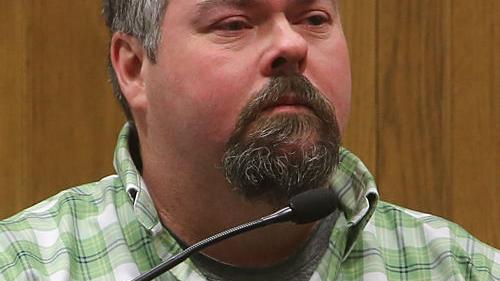
The Montana Supreme Court recently affirmed the conviction of a Hamilton business man for the sexual assault of two girls.
Randall Bryce Walker, 48, was sentenced to 100 years in the Montana State Prison after a jury took two hours to find him guilty of four charges following a five-day trial in August 2016.
Walker was the former owner of Frontier Auto Plus in Hamilton.
He was initially charged of assaulting an 11-year-old girl on Valentine’s Day in 2015 after she confided in a day care worker. During a subsequent investigation, another woman stepped forward to say Walker had sexually assaulted her over a four-year period until she was 12. The 27-year-old woman testified at Walker’s trial.
Walker maintained his innocence and found a good deal of support in the community.
District Judge Jeffrey Langton sentenced Walker to four 100-year concurrent prison sentences with no time suspended.
Walker appealed the conviction to the Montana Supreme Court, arguing that Langton improperly excluded testimony about a polygraph test as well as a psychosexual profile that indicated he had no sexual interest in children. Walker also challenged Langton’s application of the state’s rape shield law to exclude evidence of the victim’s alleged prior sexual conduct.
While a precedent had already been set on excluding polygraph evidence from all court proceedings by the Montana Supreme Court, Walker argued he should have been allowed to let the jury know that he offered to take the test to prove “consciousness of innocence.”
Once the jury knew that he offered to take a polygraph, Walker said it would also need to know its results.
Neither court was swayed by that argument.
“Walker fails to address, or even acknowledge, the Montana Supreme Court’s bright line prohibition of polygraph evidence,” Langton wrote. “Instead, he contends the issue of the admissibility of an offer to take a polygraph test has not yet been addressed by the Montana Supreme Court.”
The Montana Supreme Court ruling read: “This Court has long held that polygraph test results are inadmissible in all Montana proceedings … Even the indirect admission of polygraph test results are prohibited.”
The ruling said there are fundamental differences between a polygraph test results and other types of scientific evidence.
“It has been stated that a polygraphist opines only to the truth or falsity of an accused responses and does not comment on the guilt or innocence of the defendant,” the ruling read. “However, that distinction is illusory … If the polygraphist asks the defendant properly phased questions about relevant facts and elements of the crime, and the polygraphist then testifies at trial that the defendant’s responses were not fabricated, the testimony’s import is clear.
“The jury may easily draw an implicit conclusion that the defendant did not commit the crime for which he is charged,” the ruling read.
The court also found that allowing anexpert witness' professional opinion that Walker’s psychosexual profile showed he was not sexually interested in children would be prejudicial to a jury.
“Both are attempts to bolster the credibility of a witness; both speak directly to the guilt or innocence of the defendant; and both invade the exclusive providence of the jury to judge credibility and the guilt or innocence of the accused,” the ruling read.
Walker argued that Langton inappropriately applied the state Rape Shield Law with no regard for Walker’s constitutional rights. In its reply, the Ravalli County attorney’s office said Langton heard arguments from both sides and considered precedent before making his decision to exclude testimony from a third party about alleged sexual conduct between one of the victims and another minor.
The rape shield law is designed to protect victims from “harassing or irrelevant questions concerning their past sexual behavior” and preventing the trial from focusing on a victim’s prior sexual conduct.
The Montana Supreme Court ruled that Langton made a thorough inquiry and balanced the victim’s rights under the Rape Shield law with Walker’s constitutional rights.
The ruling stated there was no clear evidence that an incident even happened.
“The type of evidence Walker sought to admit is precisely the type of probe into (the victim’s) past sexual conduct that the Rape Shield Law was designed to exclude,” the ruling read.
The ruling was signed by four of the seven justices.
Montana Supreme Court Judge Ingrid Gustafson agreed with the result of the majority’s ruling, but disagreed with the extent of its analysis on the appeal.
Gustafson said Walker expanded the arguments made to the district court and offered additional evidence that should have not have been considered by the court. She was joined by Justices James Shea and Dirk Sandefur.
The ruling was filed Dec. 19.
http://bit.ly/2Q61O8V


Comments
Post a Comment